
About us
Meet the team studying what foundation models know and how they use that knowledge.
Research
We use latent knowledge to describe information learned during training that can be identified in a model’s parameters or activations. Some of it shows up in an answer. Other parts emerge when we rephrase the question or examine an internal signal.
 Representation
How does a model represent what it knows?
DV-Lens maps attention and feed-forward parameters into vocabulary space, then tests which directions influence the output.
Read the study
 Evaluation
Will a correct answer survive a change in context?
EpiStableBench varies wording, format and language. Across 16 language models, even initially correct answers differed in the stability of the representations supporting them.
Read the study
 Elicitation
How can we bring an unexpressed capability into use?
HSA uses a shared hub modality to recover relationships in frozen encoders. This enables retrieval between modalities without paired training examples for that target pair.
Read the study
 Transfer
Can another model use what one model has learned?
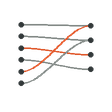
Transport and Merge uses a small set of shared inputs to match activations across two architectures. These correspondences guide the transfer of knowledge to the target model.
Read the studyTeam
Fei Shen leads the group at the NExT++ Research Centre, National University of Singapore, working with Prof. Tat-Seng Chua. We study the links between knowledge and behaviour in language, vision and multimodal models.
Research at NExT++